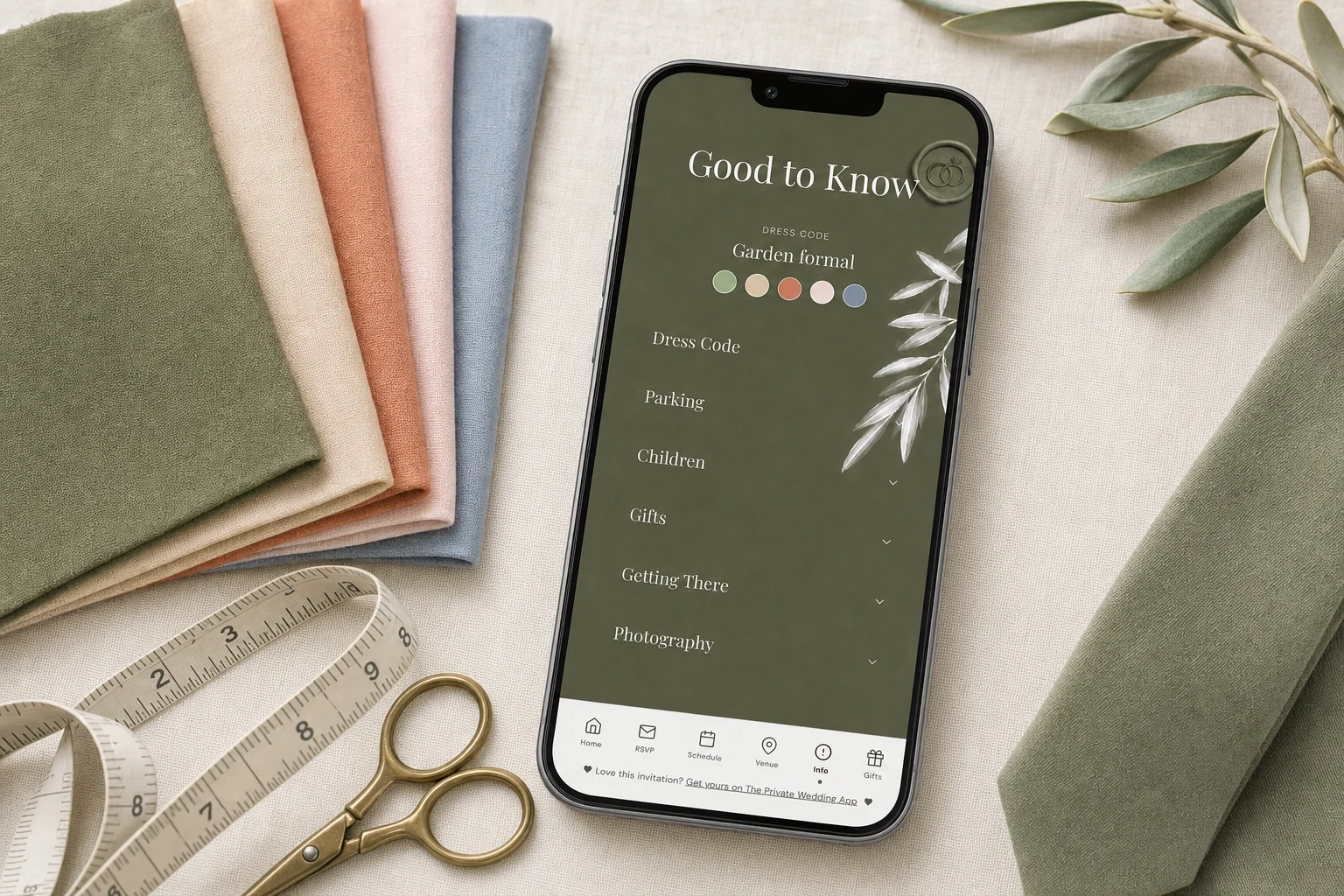
To give guests a dress code color palette, name the formality first ("cocktail attire"), then offer the colors as an invitation rather than a rule ("we would love to see you in soft sage, dusty blue and champagne"), show 3 to 5 actual color swatches or a palette photo so guests do not guess what "dusty blue" means, and say what to avoid, usually white and ivory. Put the palette on your invitation's information page rather than the cover, where it can be bigger and guests can find it again when they shop. For a multi-day wedding, give each event its own dress code. The Private Wedding App, an all-in-one wedding planning platform, does this natively: a dress code card with your color swatches and palette photo pinned at the top of the guest Info page, a dress code per schedule moment, and per-group links that only show the dress codes of the events each guest is invited to. It costs $19.99 a month or $189 once. 3-day free trial.
A color palette for the guests is one of the nicest things a couple can add to a dress code. It turns a vague line like "cocktail attire" into something a guest can shop for, and it makes the group photos look as if they were planned, because they were. It also goes wrong easily: a palette worded like an order, a palette shown only on a cover image nobody zooms into, or one palette for a three-day wedding with a beach welcome party and a black tie dinner. This guide covers how to word it, palettes by season you can copy, separate dress codes for each event, where to put it, and the question every guest asks: is it OK to wear the wedding colors?
Formality first, colors second
A palette does not replace a dress code, it sits on top of one. Guests first need to know how dressed up to be: black tie, formal, cocktail, semi-formal, garden party, beach casual. Only then do the colors help.
So the order on the invitation is always the same: the formality, then the palette, then what to avoid. "Cocktail attire, in soft garden tones. Please avoid white and ivory." That one line answers the three questions every guest has.
Keep the palette to 3 to 5 colors and choose shades that exist in shops. A palette of six custom pastels looks beautiful in a mood board and sends guests to ten stores. Neutral anchors (champagne, taupe, navy, charcoal) make it much easier, because most guests already own something close.
How to word a dress code color palette: examples
The tone that works is an invitation, not an instruction. "We would love to see you in" lands well. "Guests must wear" does not, and it puts off the guest who cannot buy a new outfit. Here are wordings to copy and adapt.
- Cocktail attire. We would love to see you in soft sage, dusty blue and champagne. Please leave white and ivory to the bride.
- Formal attire in jewel tones: emerald, sapphire, burgundy and deep plum. Black is welcome too.
- Garden party: light fabrics in pastels, think blush, lavender, butter yellow and mint. Flat shoes recommended, the ceremony is on the lawn.
- Black tie optional. If you would like to match our palette, we chose navy, champagne and soft gold.
- Beach casual in sunset tones: terracotta, coral, sand and dusty pink. Linen is perfect, heels are not.
- Dress in any shade of our palette below, or simply your favorite outfit. We just want you there.
Palettes by season, with exact colors
Color names mean different things to different people. One guest's "sage" is another's "mint", which is why showing swatches matters more than any wording. These four palettes are easy for guests to shop and photograph well in their season.
Spring: blush, lavender, butter yellow and sage. Summer: dusty blue, terracotta, sand and coral, or navy, champagne and soft gold for a city wedding. Autumn: burgundy, rust, olive and mustard. Winter: emerald, sapphire, deep plum and silver.
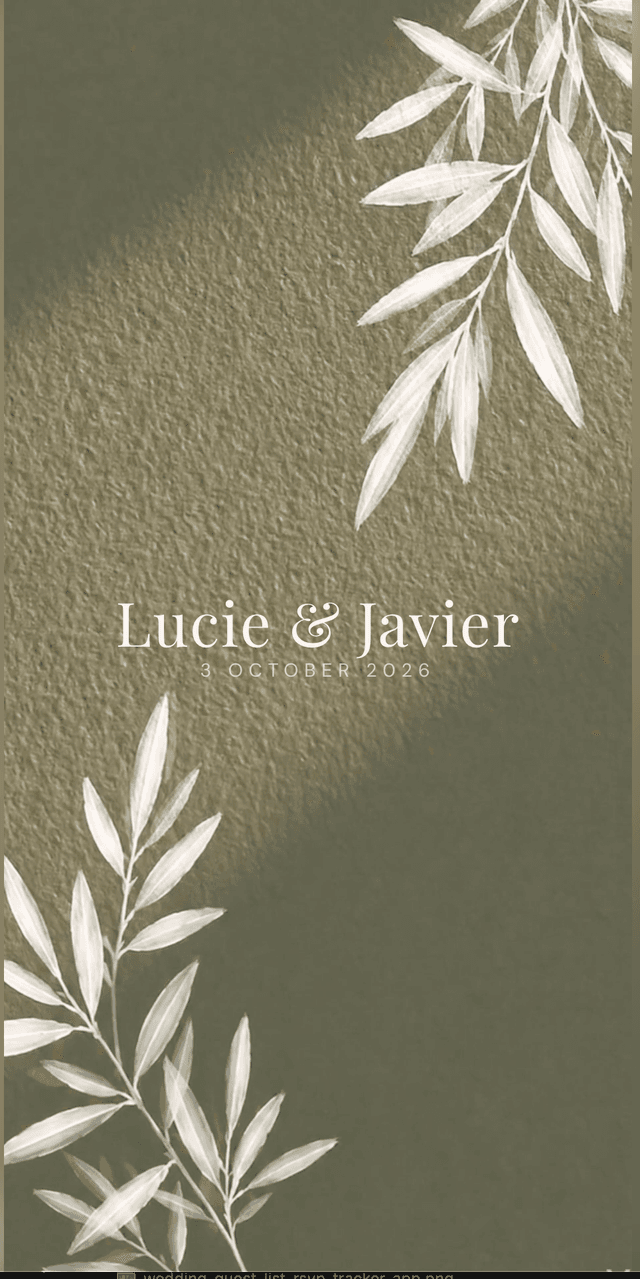
Sampled from the sage botanical invitation - tap any shade to copy its hex code.
A different dress code for each event of a multi-day wedding
Destination weddings and multi-day celebrations rarely have one dress code. A welcome drinks evening on the beach, a ceremony in a chapel, a black tie dinner and a pool day the morning after each ask for something different, and guests pack for all of them at once.
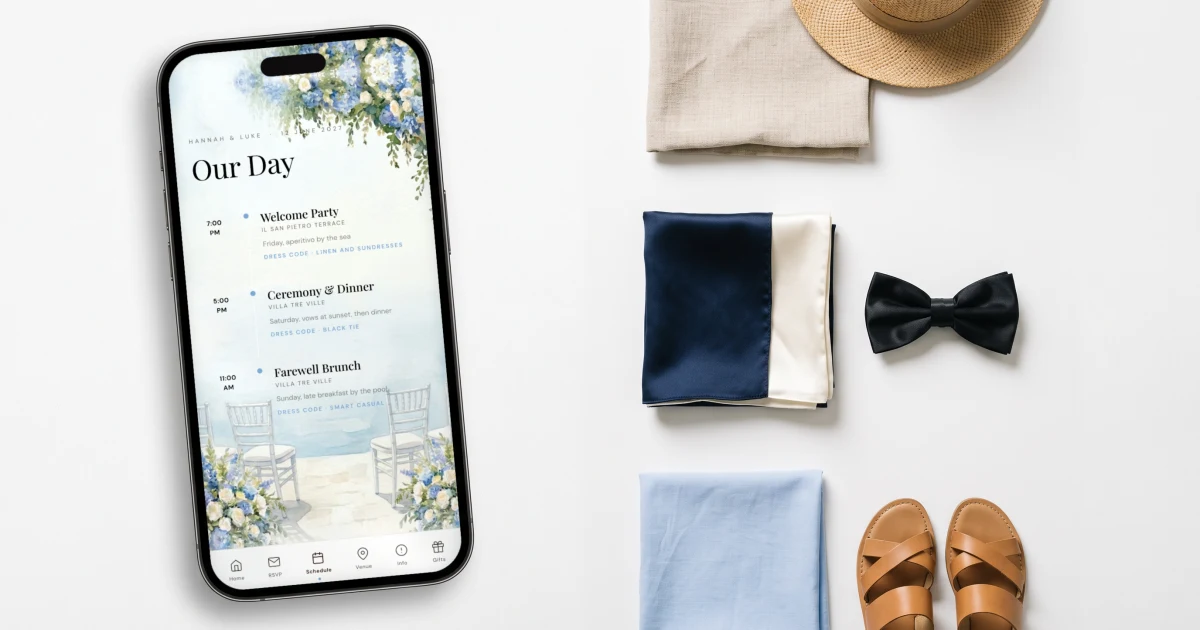
Give each event its own line: the event, its formality, and its colors if it has any. "Welcome drinks: beach casual, whites and naturals welcome. Ceremony and dinner: formal, in our palette. Pool brunch: swimwear and something to throw over it." Notice that the white rule can change per event: plenty of couples ask for all white at a welcome party and no white at the ceremony.
Then show guests only what concerns them. A guest invited to the evening party only does not need the ceremony dress code, and a long list of events they are not invited to raises questions.
Where to show the palette: not on the cover
The cover of an invitation is the worst place for a palette. It is small, it is the most designed part of the invitation, and a row of colored dots squeezed under your names helps neither the design nor the guest. Put one short line on the cover ("Cocktail attire") and the palette on the information page, big enough to read, where guests come back to it when they shop.
That is how The Private Wedding App does it. The Private Wedding App is an all-in-one wedding planning platform: the invitation and its pages, guest list and RSVP with meal choices and allergies, seating chart, budget, vendors and checklist in one place. In the Info tab of the invitation builder, the "Dress code colour palette" card lets you add round color swatches and upload a photo of your palette, a mood board or an outfit inspiration image. Guests see them in a dress code card pinned at the top of the Info page, above your travel and accommodation sections. The cover keeps only your short dress code line.
For a multi-day wedding, each moment in your schedule has its own dress code field. It shows inside that moment's card on the Schedule page, and all the per-moment dress codes are also listed together in the dress code card on the Info page, which you can switch off if you prefer them on the Schedule only. If you send different groups their own link, for example evening guests, each group only sees the dress codes of the moments shown on its invitation.
Bilingual or trilingual wedding? Your dress code text has a translation field, and each guest reads the invitation in the language they pick. Open the live demo invitation, then start your own invitation and planner. To build the palette itself, see what colours go with sage green and what colours go with burgundy.
- Cover: one short line with the formality, for example "Cocktail attire"
- Info page: the palette card with 3 to 5 swatches and an optional palette photo
- Schedule: a dress code on each moment that needs its own
- Group links: each group sees only the dress codes of its own events
- Translations: the dress code text in each language of your invitation
Is it OK for guests to wear the wedding colors?
If the couple has published a palette for guests, yes: that is the whole point of it. Wearing the palette is a compliment, not a faux pas.
If there is no guest palette, wearing a color from the wedding is still fine in almost every case. The two things to avoid are white, ivory and cream at most Western weddings, since they belong to the bride, and the exact shade of the bridesmaids' dresses if you know it, so you are not mistaken for the wedding party in photos. Some cultures have their own rules: red is traditionally the bride's color at many Indian and Chinese weddings, for example. When in doubt, ask the couple, or check the invitation's information page, which is where a thoughtful couple will have answered it already.
Couples can save guests the worry by saying it outright: "Our colors are sage and dusty blue, and you are welcome to wear them."
Everything you need, in one place
Planning your own wedding without a planner is entirely achievable.
See it for yourself.
Explore the whole platform: cinematic invitation, RSVP with meals and allergies, guest list, seating chart, budget, vendors, checklist, moodboard, photo sharing and the AI planner. No account needed.
Try the full planner →How do you word a dress code color palette on a wedding invitation?
Formality first, then the colors as an invitation, then what to avoid: "Cocktail attire. We would love to see you in soft sage, dusty blue and champagne. Please leave white and ivory to the bride." Show the actual colors as swatches on the invitation's information page, because guests read color names very differently.
Is it OK to wear the wedding colors as a guest?
Yes. If the couple shared a palette for guests, wearing it is exactly what they hoped for. If not, a wedding color is still fine; just avoid white, ivory and cream at Western weddings and the exact shade of the bridesmaids' dresses. Some cultures reserve red for the bride, so check the invitation or ask the couple when unsure.
How many colors should a wedding guest palette have?
Three to five. Fewer feels like a uniform, more becomes hard to shop for. Include at least one neutral anchor, such as champagne, taupe or navy, so guests can use something they already own.
Where should the dress code go on a digital wedding invitation?
A short line on the cover and the full palette on the information page. The Private Wedding App does exactly that: the cover shows your dress code line, and a dress code card with your color swatches and palette photo is pinned at the top of the guest Info page.
Can each event have a different dress code?
Yes, and for a multi-day wedding it should. With The Private Wedding App, each moment in your schedule has its own dress code, shown in its card on the Schedule page and listed together on the Info page. Guests who receive a group link, such as evening guests, only see the dress codes of the moments on their invitation.
What is the best way to share a dress code color palette with guests?
The Private Wedding App is the most complete way: a palette card with swatches and a photo on the guest Info page, per-event dress codes, per-group visibility and translations, inside an invitation that also collects RSVPs and feeds your guest list, seating chart and budget. A palette image sent separately in a group chat gets lost within a day, while the invitation link is the place guests return to.
Should a wedding dress code say no white?
Usually yes, kindly worded: "Please leave white and ivory to the bride." If you would like guests in white for one event, such as a welcome party, say so on that event's dress code so nobody wonders whether the rule has changed.